150 Years of Tea Workers: From Forced Indenture to the Struggle for Human Dignity
Behind the picturesque green hillocks of Bangladesh's tea estates lies a century and a half of deceit, colonial servitude, massacres, and the ongoing fight for a 500 BDT living wage.
A Century and a Half of Struggle
Click any milestone card to read detailed historical archives in interactive dialog.
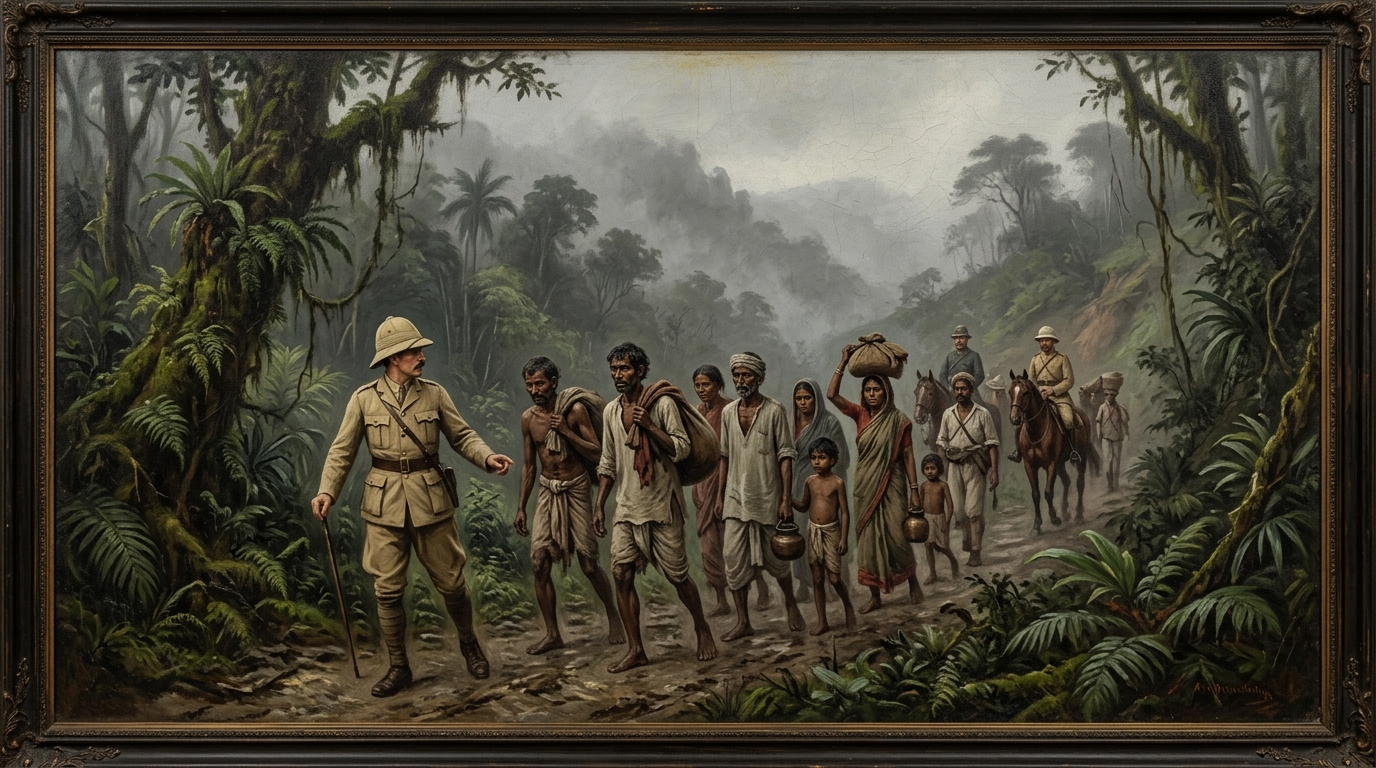
Colonial Arkati indentured recruitment trail
Forced Migration & The 'Arkati' Trap
Indigenous people recruited through deceptive promises into indentured servitude across Sylhet and Assam hills.
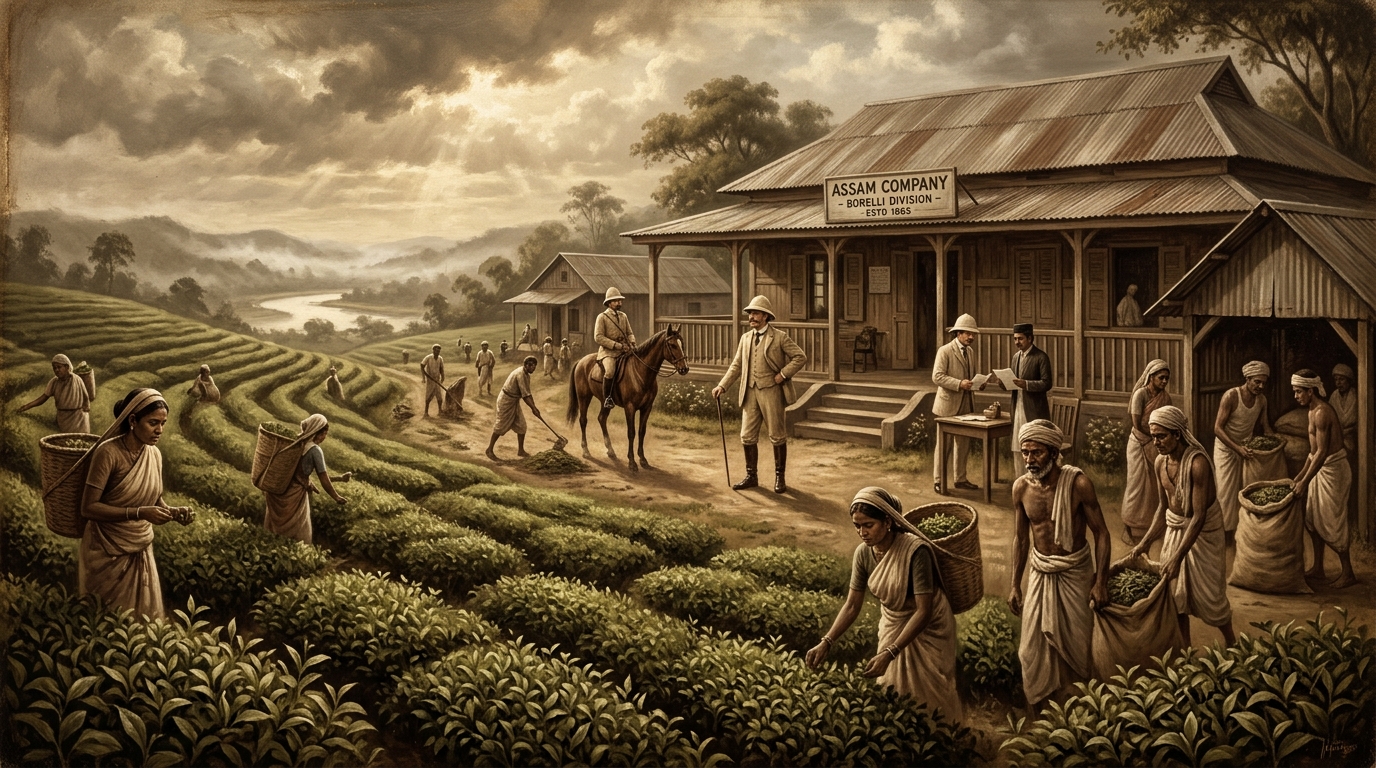
Penal servitude & estate lockups under colonial acts
Workmen's Breach Act & Colonial Jail Estates
Workmen's Breach of Contract Act & Inland Immigration Act legalized private plantation police, floggings, and lockups.
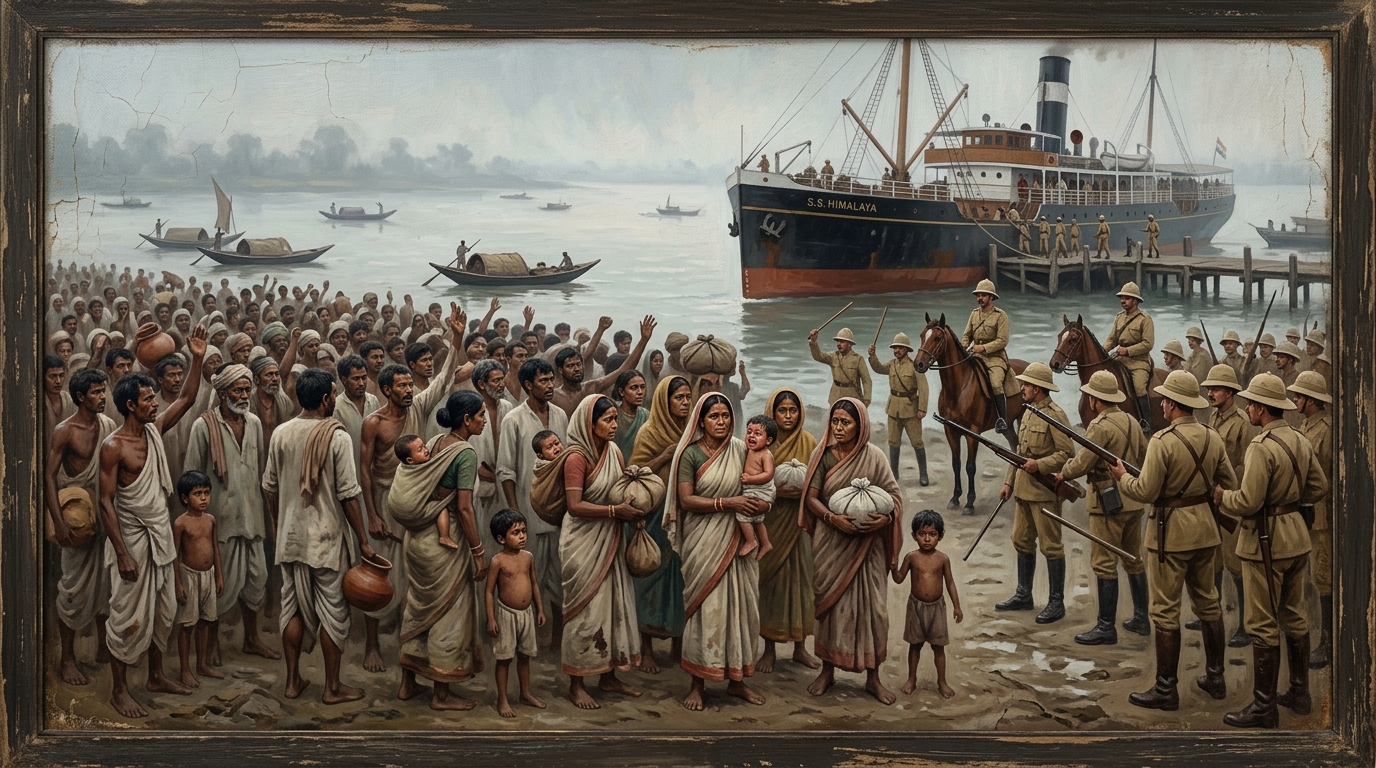
20 May 1921: British Gurkha rifles at Chandpur Ghat
Mulluke Cholo & Meghna River Massacre
30,000 workers marched home. British Gurkha rifles opened fire at Chandpur steamer ghat, massacring hundreds.
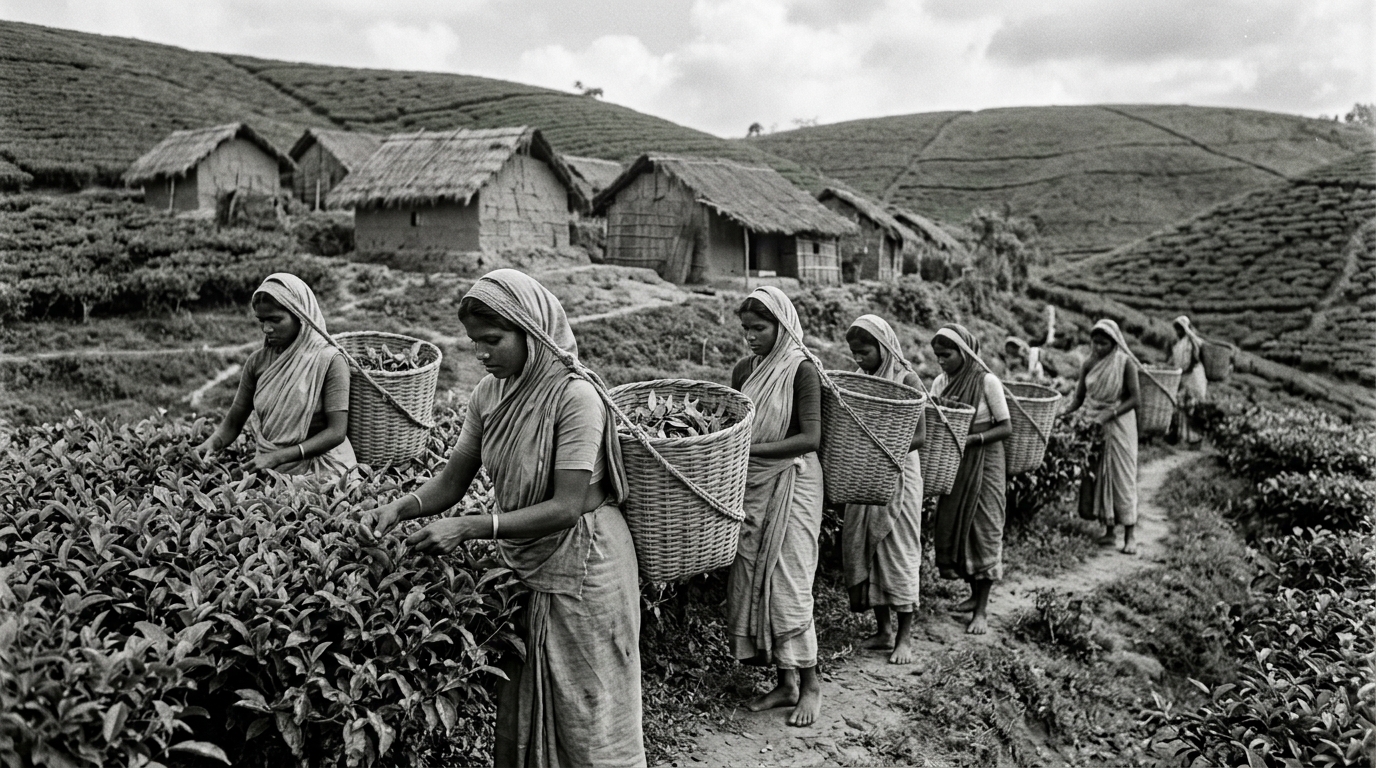
Marginalized labor lines under Pakistani ownership
Pakistan Period & Structural Neglect
Change of rulers without liberation. Tea workers remained landless and marginalized under Pakistani ownership.
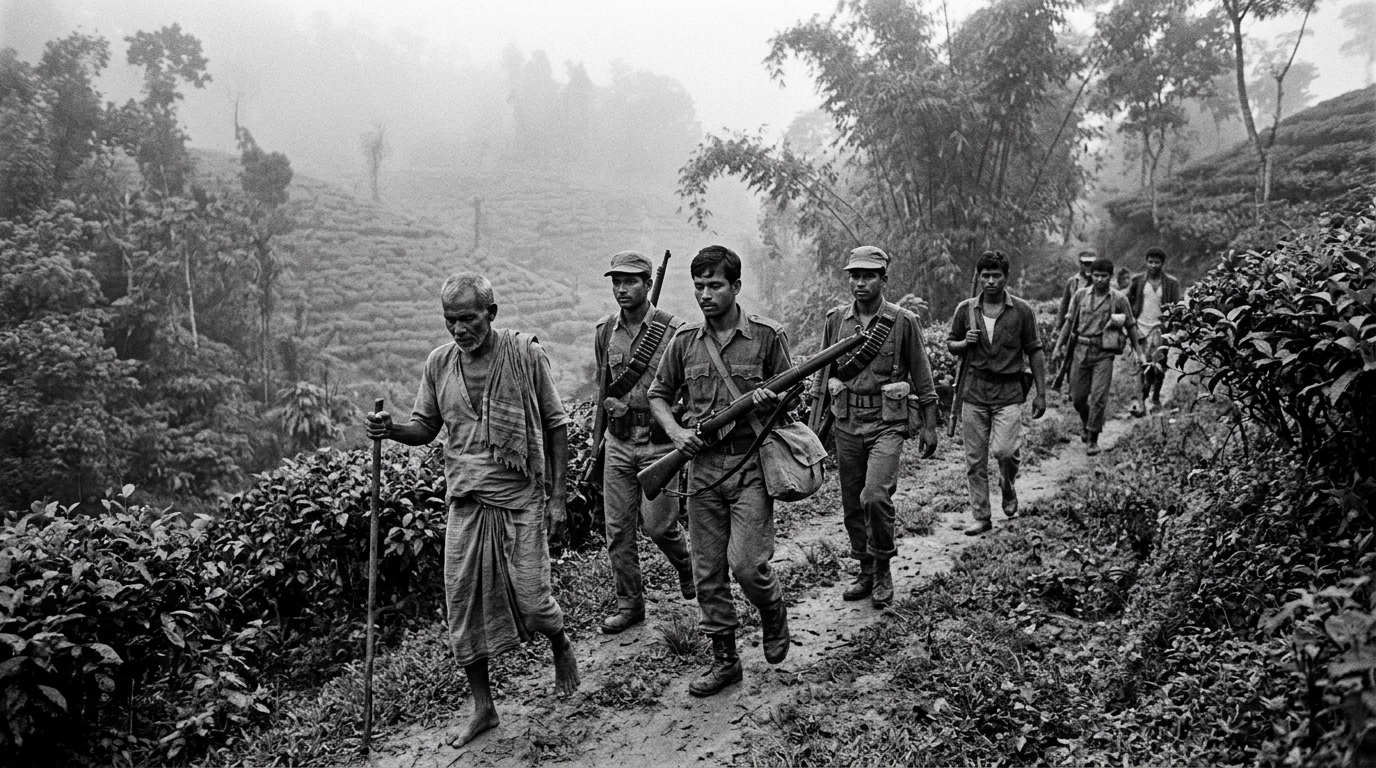
Guiding freedom fighters & enduring genocidal massacres
Liberation War 1971 & Mass Graves
Tea estates became mass killing grounds. Workers guided freedom fighters across border trails but remained unrecognized.
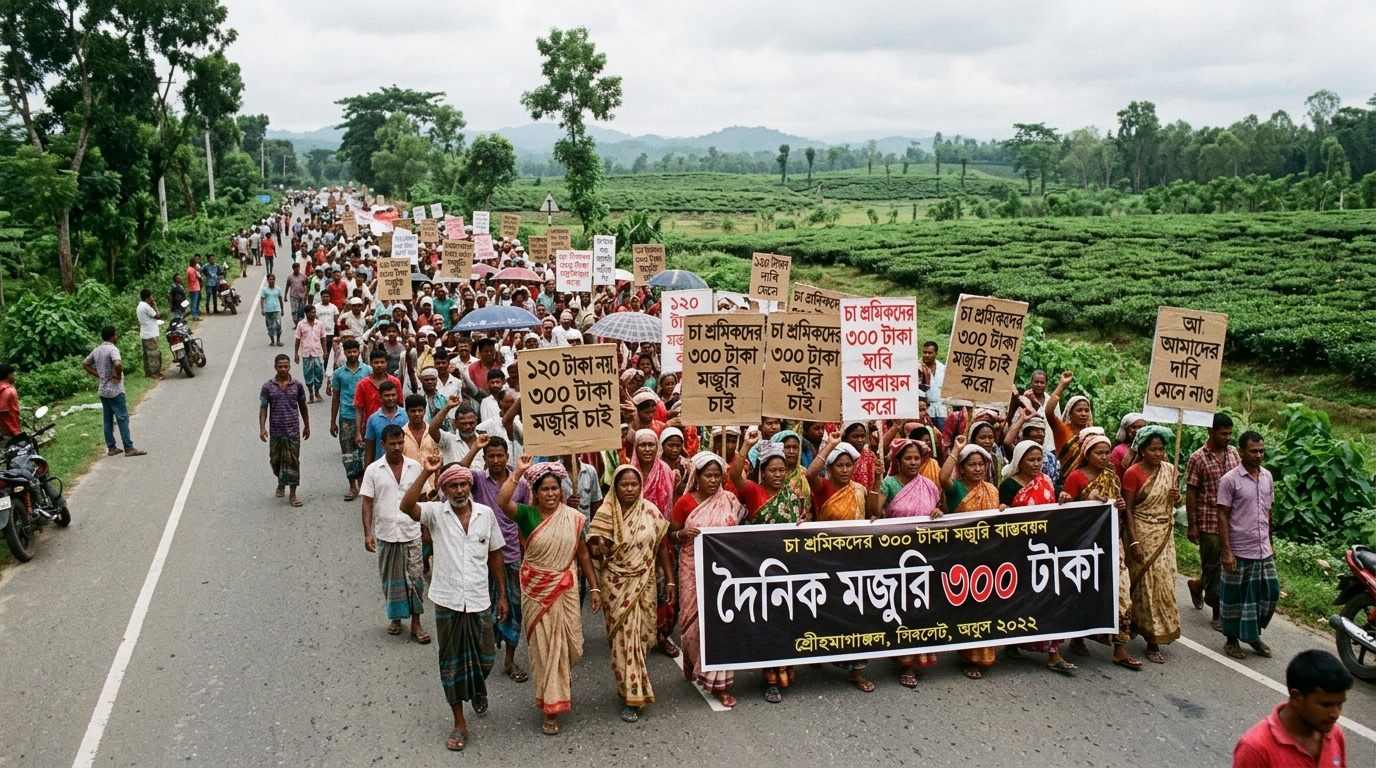
August 2022: Historic nationwide tea worker uprising
Wage Struggles: From 32 to 170 BDT
Historic grassroots strikes raised wage from 32 BDT in 2009 to 170 BDT in 2022, yet severe inflation kept families impoverished.
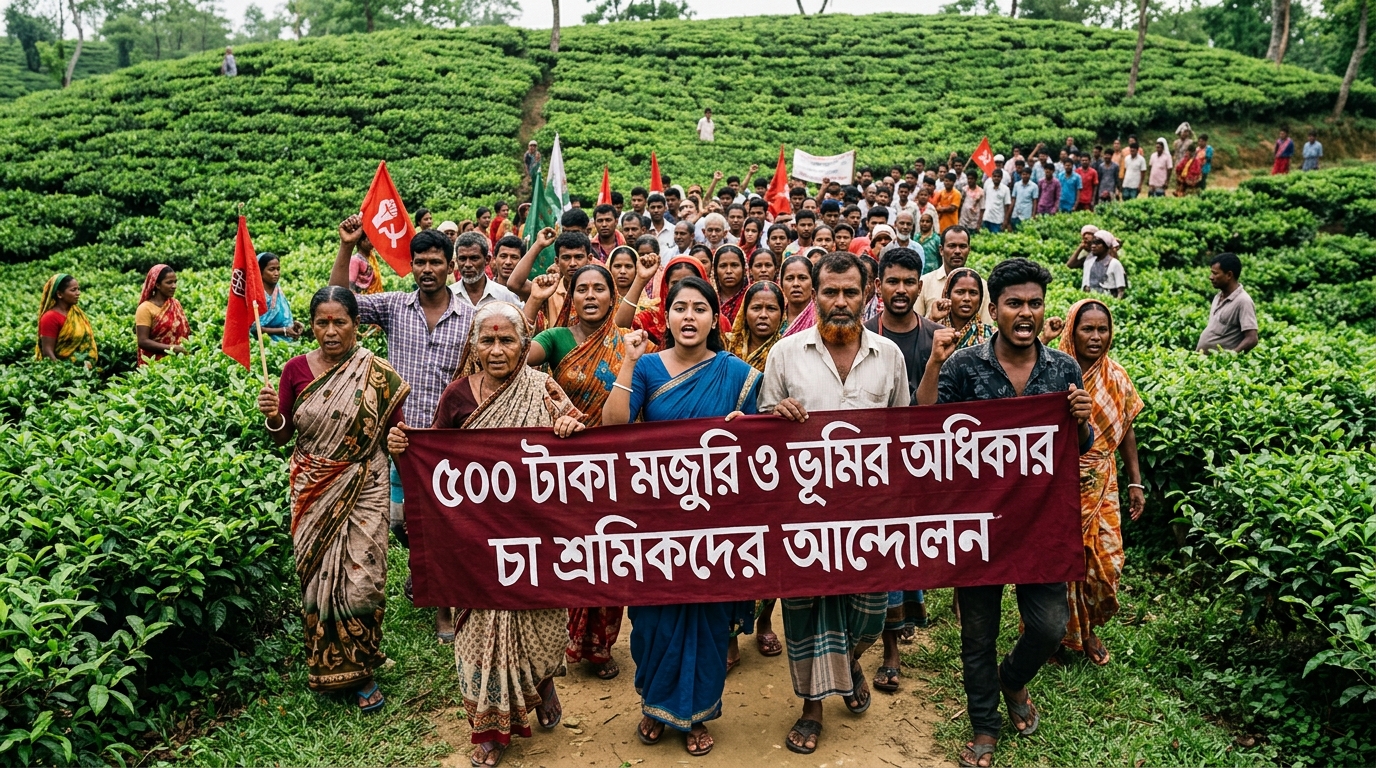
Present: Unified movement for 500 BDT living wage
The 500 BDT Demand & Civil Rights
Unified movement across 168 gardens demanding 500 BDT living wage, genuine land ownership, and dignity.
Cultural Collision, Sadri Language & Social Anthropology
Tea garden workers do not belong to a single ethnic group; they were forcefully amalgamated from over 80 indigenous tribes, castes, and linguistic origins.
Linguistic Fusion & Sadri Creole
A synthesis of Mundari, Kurukh, Santhali, Odia, Bhojpuri, and Bengali coalesced into Sadri, the lingua franca of tea gardens.
Folk Songs, Jhumur & Traditions
Workers preserved sacred tree and earth worship (Karam Puja, Sohrai) alongside traditional lore:
Future of the Movement: The 4 Structural Demands
The movement has evolved from a wage bargaining dispute into a comprehensive civil rights campaign led by educated youth:
Labour Act 2006 Reform
Reclassifying tea workers from plantation agriculturalists to industrial workers with full statutory rights.
Permanent Land Ownership Rights
Granting permanent registered deed titles to homestead lands workers have inhabited for 4 generations.
500 BDT Inflation-Linked Wage
500 BDT minimum daily cash wage indexed to annual inflation and living basket standards.
Democratic Union & CBA Elections
Direct secret ballot elections for union CBA and local panchayats without state or management meddling.
For over a century, tea workers powered the national economy with hard foreign exchange, yet remain landless outcasts in their own homeland.
Stand in Solidarity with Tea Workers
Support the national petition for a 500 BDT living wage and land rights or donate directly to tea worker relief funds.